An unnatural hairline
A hairline that is too low, too regular or too sharply defined can make a transplant noticeable. The design and transitions are assessed alongside existing hair.
An unnatural hairline, uneven density, hair growing in the wrong direction or visible scars may prompt a consultation after a scalp, beard or eyebrow transplant. The first appointment assesses the options and limitations of correction, without committing you to another procedure.
A hairline that is too low, too regular or too sharply defined can make a transplant noticeable. The design and transitions are assessed alongside existing hair.
Angle and direction matter for scalp hair, beards and eyebrows. The consultation identifies the areas that concern you.
Sparse areas or an uneven distribution may prompt a request for advice. Assessment takes account of how long it has been since surgery.
Skin condition and previous harvesting influence the options. Remaining donor resources must be assessed before further transplantation is discussed.
After a disappointing experience, apprehension about another procedure is understandable. The consultation begins with listening and clear explanations, so you can consider the next steps at your own pace.
Depending on the situation, correction may aim to reduce visible signs of the previous procedure and achieve a more natural appearance. It does not automatically mean adding more grafts.
The options depend on the tissue, existing grafts and remaining donor resources. Some effects cannot be fully corrected. A different treatment, waiting or no further surgery may also be suggested.
The dates, treated areas, recovery and previous treatments are reviewed. Bring any available photographs and operative records.
The design, density, graft direction, skin and donor area are assessed together.
The proposal explains possible improvements, their limitations and any stages involved. The quotation and follow-up are discussed before a decision is made.
Correction after previous transplantation: 4,418 FUE grafts in total, over several stages — a 78-graft test, followed by 2,903 and 1,437 grafts. The photographs show follow-up nine months after the final session.
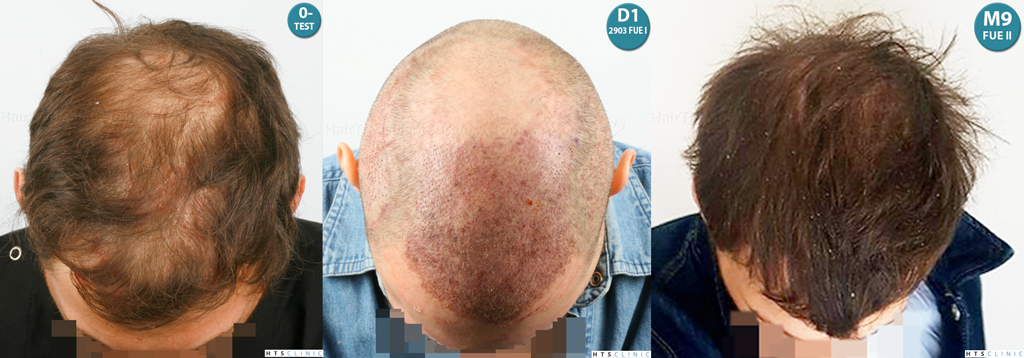
Every situation is different. This example does not promise an equivalent result.
Timing depends on the previous procedure, regrowth and skin condition. Assessment distinguishes an evolving result from a persistent concern. The timing of any correction is discussed during the consultation.
Not always. Some situations require several stages. Their number and purpose depend on the proposed procedures, the tissue and remaining donor resources.
The consultation may concern scalp hair, a beard or eyebrows. Each area requires its own assessment of design, direction, graft calibre and tissue condition.
Recovery depends on the procedures selected. Instructions and follow-up arrangements are explained for your situation before surgery and clarified afterwards.
In-person and video consultations each cost €100. Corrective surgery is quoted individually after medical assessment.
An initial appointment provides an opportunity to review your situation and ask questions. It can take place in person or, where appropriate, by video.
Doctolib · Email · WhatsApp